
Transforming the Future of Creativity and Innovation
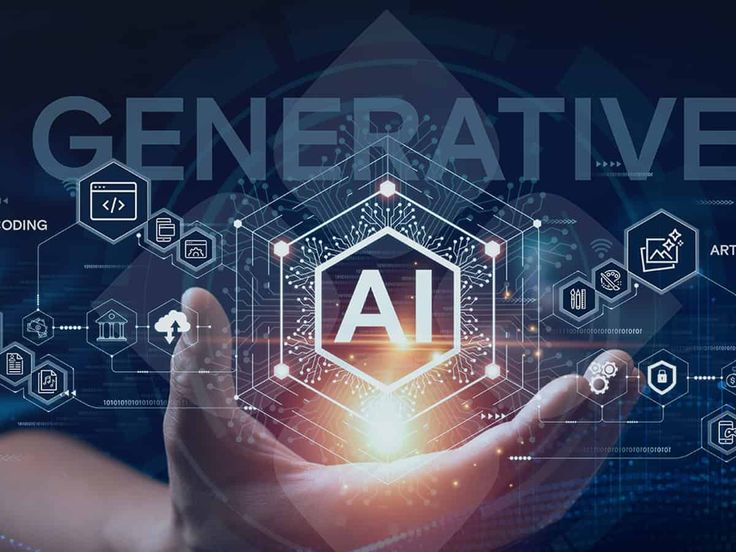
In recent years, Generative AI has moved from being a futuristic concept to one of the most disruptive forces shaping industries today. Unlike traditional AI, which focuses on analyzing and interpreting data, generative AI creates new content, whether it’s text, images, code, music, or even 3D designs based on the patterns it has learned. This ability to generate original and human like outputs is revolutionizing fields ranging from business and healthcare to art and education.
What is Generative AI?
Generative AI refers to machine learning models that can create new data similar to their training inputs. Technologies like GPT (text generation), DALL·E (image generation), and Stable Diffusion (art and design) are prime examples. By leveraging deep learning, these models don’t just process information they innovate, enabling machines to think and create like humans.
Key Applications of Generative AI
- Content Creation – Automating blogs, marketing campaigns, and creative writing.
- Design & Art – Assisting designers in producing logos, illustrations, and visual art.
- Healthcare – Accelerating drug discovery and generating personalized treatment simulations.
- Business Intelligence – Creating synthetic datasets for analysis, reducing dependency on real-world data.
- Education – Developing personalized study materials, quizzes, and practice tests.
Advantages of Generative AI
- Enhanced Productivity – Speeds up creative and technical workflows.
- Cost Efficiency – Reduces the need for large teams in certain areas of content production.
- Personalization – Generates content tailored to individual preferences and contexts.
- Innovation Power – Unlocks new possibilities in industries such as architecture, fashion, and entertainment.
Challenges and Ethical Considerations
While the potential is immense, generative AI also raises challenges :
- Bias and Fairness – AI can inherit biases from training data.
- Misinformation Risks – Deepfakes and AI-generated content can spread false information.
- Intellectual Property – Questions arise about ownership of AI generated creations.
- Job Disruption – Some industries may face workforce shifts due to automation.
Generative AI is still in its early stages, but its trajectory is clear: it will play a central role in shaping digital transformation. As regulations evolve and ethical frameworks strengthen, the technology will likely become a trusted collaborator across industries, empowering humans to focus on higher-level creativity, problem-solving, and innovation.